
Bunii, born Niccolo Virgilio Terre, is a Filipino-American singer-songwriter and producer from California whose music blends alternative rock, emo, indie and pop with influences from underground rap. Known for playing and producing much of his own music, Bunii has developed a sound rooted in personal storytelling, family and an increasingly genreless approach to songwriting.
Q: Tell me about yourself. What are some things you like to do, hobbies, places you like to eat at, or places you like to visit?
Bunii: Honestly, I don’t really do much outside of music. When I’m not thinking about music, creating music, or listening to music, I love watching horror movies. I’ve picked up hobbies like solving Rubik’s Cubes or building mechanical keyboards but nothing has ever made me feel as safe and welcome as music.
“Nothing has ever made me feel as safe and welcome as music.”
What does a typical day look like for Bunii?
After brushing my teeth and whatnot I usually walk to my mom’s house to go over whatever business matters need to be tended to. After that, the rest of my day is usually spent in my home studio working on music or listening to music. On the rare occasion I do go out, I’m usually looking for new clothes on Melrose or bothering music store salespeople.
If you were to teach a subject in school, what subject would it be and why?
Avoiding the obvious answer of a music class, I’d love to teach ethnic studies. Growing up in the places I did and being raised by a single mother really taught me the value of understanding the history of oppressed communities who have been silenced. And every day I strive to learn and grow with this in mind. The way I see it, we live in a world where people in power benefit from others’ ignorance and it would be an honor to be seen as someone that is helping to fight against that.
“We live in a world where people in power benefit from others’ ignorance.”
How much would you say your upbringing in Los Angeles has impacted your artistry?
Growing up in L.A. has allowed me to connect with and appreciate so many different cultures and communities. It’s allowed me to use my art as a tool to bring people together and resonate with folks that I don’t even know, regardless of who they are or what their background is. The diversity in Los Angeles has shaped how I create my art and the stories I want to tell.
You have an interesting ethnic background, being Filipino. How does your heritage play into your music?
Filipinos have a community-based mindset. They’ve uplifted me and rooted for me ever since people found out I was a proud Filipino. Having such a big family behind me, blood-related or not, has helped me through so much and gotten me to where I am today.
“Having such a big family behind me, blood-related or not, has helped me through so much.”
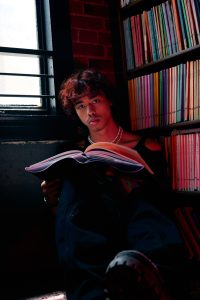
When did you write your first song, and how did that song come to be?
I wrote my first ever song when I was 3 years old with my older cousin Michael. It was complete toddler gibberish but the passion behind it was definitely as strong as it is today. Officially, the first song I seriously wrote as Bunii was Rott. I always knew I wanted to be a solo artist and I just remember being so tired of hearing the same sounds. As I was creating Rott, I was intentional about wanting to have a sound so distinct and unique that people had no choice but to listen to my music if they wanted to hear it.
What was the moment that made you realize that being a musician was the right path for you and that’s what you wanted to pursue?
Truly, there was never a moment where I didn’t want to make music. My mom is a total music-head and has always had crazy good music taste that shaped my own. My dad always had instruments lying around and when his bandmates would come over to practice in Wisconsin they’d always let me watch and even sing a few songs with them. I had developed this passion so early on that a life without music has always seemed completely unfathomable to me.
“A life without music has always seemed completely unfathomable to me.”
Your music feels like a sonic representation of a diary, vulnerable but also like it was written in the back of a classroom. Where does this aesthetic come from, and were you ever that kid writing songs in the back of class?
I was too scared (and high) to actually write my lyrics in school but I was certainly in the back of the class daydreaming about when I could get home and work on my songs. For a long time I was terrified of talking to people about my real feelings but for some reason singing about them came so easily. I was far too deep in my own head to realize what I was doing, I just knew that after I finished a song the weight on my shoulders got a little lighter.
You recently paid tribute to your late grandfather by doing a cover of his favorite song, “The Great Pretender,” a song that was also covered by Freddie Mercury. Describe your grandfather’s impact on you and your music, and how he shaped you as an artist.
My grandfather Virgilio is a legendary ancestor in my eyes. He passed away when I was a baby but I’ve felt his energy with me throughout my entire life. The sacrifices he made to provide a better life for his family in America is something that I keep in mind with every decision I make. My main goal with my career is to make sure that nothing he endured was in vain.
“My main goal with my career is to make sure that nothing he endured was in vain.”
How does it feel to have your mom be your manager? A music manager is such a crucial position for an artist’s career, so how is y’all’s relationship together, and does she push you to be the best version of yourself?
Having my mom as my manager has been a huge relief to me. As I continue to grow, I find myself having to question people that try to enter my life and find it harder to discern who is there for “Bunii,” who is there for “Nicco,” and who is there to serve themselves. I never have to question my mom. I can always trust that she has my best interest in mind and truly just wants me to succeed and be happy above all else.
“I find it harder to discern who is there for ‘Bunii,’ who is there for ‘Nicco,’ and who is there to serve themselves.”
You’ve been an artist who’s beloved by many underground social media circles. Do those communities embracing you help build your confidence?
The underground community in general is a beautiful place where people can come together and celebrate very raw, authentic, and “real” pieces of art. Experiencing this is a big reason I got to where I am today and has certainly helped me gain my voice and confidence. The other side of that, however, is a lot of unchecked and unfiltered toxicity that stems from the ego people gain behind a screen and perceived anonymity. Early on, this really hurt to experience but it helped me build thick skin and forced me to be secure with myself and my ability as an artist.
Your social circle is comprised of a diverse group of genres, from hardcore and other forms of alt-rock to hip-hop. Which parts of each culture would you say inspired you the most?
It’s really hard for me to pinpoint what helped the most because I find that those cultures share so many beautiful similarities. As of right now, I love the intricate guitar melodies of genres like midwest emo and jazz music, the hard-hitting bass of modern underground rap, and the crazy vocal runs in a lot of r&b songs. There isn’t one specific aspect of each genre that I pull from, it’s more of a matter of which aspects I feel I resonate with most at a certain point in time.
Are you more influenced by your local scenes or larger artists who you look up to? Is there an intersection between the two?
I would say it’s a mix of the two. Living in Wisconsin for a period of my life has exposed me to my more obvious influences like the midwest emo scene, even though I really dove into it fully after I had already moved back to California. And with that, there are plenty of major artists that are huge influences to me that most people probably wouldn’t expect like Stevie Wonder or J Boog. Bands like Green Day are somewhat of an intersection although the bay area is almost a whole different world than Los Angeles.
What are your thoughts on the current state of the underground?
I think the underground is in a very awkward stage at the moment. Teens rule the world and what’s now considered “underground” is arguably slowly becoming mainstream. People like Nettspend are charting on Billboard and modeling for Gucci. The people that were vehemently defending the 2016 XXL cypher are starting to become the “oldheads.” Everything is changing rapidly and it’s hard to tell where exactly it will land but I’m confident it’s only up from here.
“What’s now considered ‘underground’ is arguably slowly becoming mainstream.”
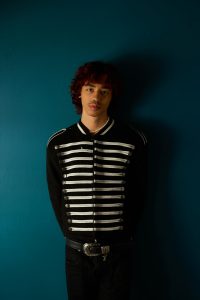
Does the “underground” label bother you, or is that something you accept with your artistry?
Through all the online discourse, I try my best to take the term “underground” at face value. There are very few people that get to skip the part of their career attached to that label and it’s nothing to be ashamed of.
What is one thing you would change about the current scene and the music industry as a whole?
I want people to prioritize the art over their aesthetics. Obviously, both are important to anyone hoping to build a fanbase, but I believe the main focus should always be the quality and intention of the music made by actual humans. Every day it gets harder to determine whether someone’s genuinely passionate about the art they create or they just want to be a social media influencer that does shows. This is particularly concerning to me because when those trends pass and that aesthetic dies, who really are you?
“When those trends pass and that aesthetic dies, who really are you?”
What is the worst trend in music right now, and why?
I think the seemingly growing message of things like self harm and depression have the potential to be very dangerous, coming from someone that’s written plenty of songs about both. I wholeheartedly believe that using music as an outlet for all the things you have trouble expressing otherwise is a beautiful act. However, with the rise of the “online indie scene,” I feel as though there are certain people who are using those very real struggles as an aesthetic and are walking a thin line between self-expression and glorification. My hope is that people become more intentional and aware of what they’re saying in their songs.
On your song “et,” you pay homage to the film E.T., but the track also features a melody reminiscent of Juice WRLD’s “Robbery.” Is Juice WRLD an inspiration to you, and how has his impact influenced your music?
I was only around 12 when Juice WRLD was here, but I definitely did love his music and was crushed when he passed. My music taste now is vastly different from my 12 year old self and I don’t find myself listening to it that often anymore, but I don’t doubt that my history with his music subconsciously shone through while I was making that song.
Do films play a role in your creative process? If so, which films are your favorites, and which have inspired you the most?
I pull a lot of the inspiration for worldbuilding and songwriting around my projects from films, especially for my most recent project ‘WATSNEXT’. A few of my favorites are La Bamba, Whiplash, and O Brother Where Art Thou, which is where I found the inspiration for the song ‘BIG DAN TEAGUE KILLED PETE.’ I believe watching these movies played a big part in my development as a storyteller.
“I pull a lot of the inspiration for worldbuilding and songwriting around my projects from films.”
How has your process for creating projects progressed, going from Bastard to Virgilio to what you’re working on next?
The process has stayed relatively the same at its core, but I’ve gotten access to way more resources that allow me to get my ideas out more thoroughly and authentically. I’m still writing and playing the instruments by myself at home but now I have a real drum kit and real amps to mic up. Overall, it’s helped me become a lot more expressive with my music.
Over time, you’ve slowly begun to make longer and longer songs. Does it feel like the longer runtime gives you more time to articulate yourself, or is it just a natural progression?
I think I’ve naturally drifted away from making one minute songs because I want to be more dynamic both as a songwriter and producer. My earlier, shorter songs were intentionally made to be catchy and concise to grab peoples’ attention, but now I spend more time focusing on building a full story with each song both in the writing and instrumentation.
What is the direction of Bunii as a project? Is there a genre in mind that you want to stick to? Are you aiming to make something completely new? Maybe both?
A lot of what I write about comes from times where I felt alone and unheard, and I want Bunii to be the voice for those who have had similar experiences. Genre isn’t something that I consciously think about when I make my music, I’m more concerned with doing something that sounds unique to me with whatever influences come to mind. In ten years I want to be known as someone that birthed their own genre.
“In ten years I want to be known as someone that birthed their own genre.”
You and Ezcodylee are two of the biggest names from the scene, and “It’s Okay” is a really cool moment for the both of you. How did that song come about, and what does it mean to you?
I initially found Ez through tiktok and thought his music and the messages he was spreading in it were amazing. We eventually ended up connecting and working for a few days on call before coming up with a first draft of “It’s Okay.” It took some time before we were able to drop it but that allowed it to grow and evolve as a song until it finally became what it is today. It felt great to collaborate with someone I can tell was as passionate as me about their music and I love the combination of both of our distinct sounds.
What are your thoughts on the recent resurgence of EDM? Is that a sound you’d ever want to experiment with in the future?
I love the sound of EDM music. I think it’s really cool and wouldn’t be opposed to experimenting some more with it.
Now that so many people know Bunii, is there anything you miss about being completely unknown?
I miss not having to wonder if the people around me have genuine intentions or are only there to benefit themselves. As I continue to grow, the perceived value of my friendship gets higher and the things people will do to be cool with me get dumber. I’ve done a lot of internal restructuring in my social circle because of this.
“As I continue to grow, the perceived value of my friendship gets higher.”
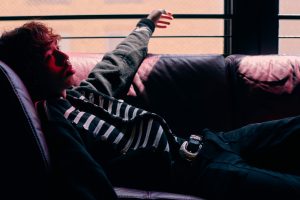
Becoming commercially successful and famous comes with a lot of spotlight, but it can also come with unnecessary baggage. What’s one thing you wish you could erase from stardom or fame?
Parasocial behavior. It feels really awkward.
If you could make one song with any artist, living or dead, who would you choose and why?
The main person that comes to mind is Stevie Wonder. I definitely get my love for Stevie from my mom and he has pretty much always been the king of music to me. I pull so much inspiration from every aspect of Stevie and truly believe he is one of the best musical storytellers of all time.
If we talked again a year from now, what would you want to be able to say you’ve accomplished?
The main things I want to be able to say I’ve accomplished are having a song chart on billboard and attending the GRAMMYs in any fashion. It’d be a cool bonus if I was nominated.
To close it out, what’s a message or quote you want to leave for anyone chasing their dreams?
Never let anybody convince you that the stuff you’re passionate about is uncool. Don’t let anyone’s words change who you are or take you off the path you know you should be on. People are going to find any reason to tear you down once they see you growing and advancing, and the joy of loving what you do infinitely outweighs the regret of quitting… and listen to your mom.
Designer, Writer, & Coordinator: Ed Roobi
Photogrpaher: Jonathan Weiner
Art Director: Alyssa Fractor
Stylist: Sami Norris
Photo Assitant: Erick Mendoza
Interview Questions: Adair Mahan, Chris Johnson, Grant Roundtree, Giancarlo Diloy, Jojo P, & Ed Roobi